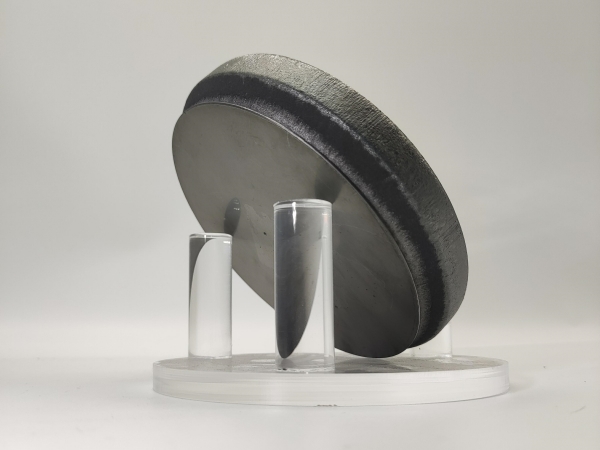
Gallium nitride (GaN) has become a key material for modern electronics and optoelectronics, widely used in power devices, LEDs, RF components, and ultraviolet detectors. One of the most commonly used substrates for GaN epitaxy is sapphire (Al₂O₃). Thanks to its stable physical properties and mature manufacturing ecosystem, sapphire has been widely adopted in the GaN industry for decades.
However, while sapphire substrates offer several important advantages, they also introduce technical challenges that can affect device performance and manufacturing efficiency. This article provides a clear overview of the benefits and limitations of using sapphire as a GaN substrate, helping engineers, researchers, and procurement teams better understand its role in semiconductor manufacturing.

Why Sapphire Is Widely Used as a GaN Substrate
Sapphire remains one of the most established substrates for GaN device fabrication. Its combination of mechanical strength, optical transparency, and stable processing characteristics makes it suitable for many commercial applications.
1. Good Thermal Conductivity
Sapphire has a thermal conductivity of approximately
25 W/m·K, which helps dissipate heat generated during device operation. Effective heat dissipation improves the
stability, reliability, and lifespan of GaN-based devices, especially in optoelectronic applications such as LEDs and UV emitters.
2. Relatively Favorable Lattice Compatibility
Although sapphire is not perfectly lattice-matched with GaN, it offers
better compatibility than some other common substrates, such as silicon. This makes it possible to grow GaN epitaxial layers using established techniques like
MOCVD and HVPE while maintaining acceptable crystal quality.
3. Optical Transparency
One of sapphire’s unique advantages is its
high optical transparency, particularly in the ultraviolet and visible wavelength ranges. This makes sapphire substrates especially valuable for:
- LED manufacturing
- UV photodetectors
- Laser and optoelectronic devices
Because the substrate does not significantly absorb light, device efficiency can be improved in many optical applications.
4. High Mechanical Strength
Sapphire is known for its
excellent hardness and mechanical durability. This strength improves wafer handling during manufacturing and contributes to the long-term reliability of finished devices.
5. Mature Supply Chain and Processing Technology
Another major advantage is the
well-established manufacturing infrastructure for sapphire wafers. Over many years of industrial use, sapphire processing technologies have become highly optimized. As a result:
- Production processes are stable
- Equipment compatibility is high
- Supply chains are reliable
- Costs are relatively controlled compared with some advanced substrates
This maturity is one of the key reasons sapphire continues to dominate in LED production.
Limitations of Sapphire as a GaN Substrate
Despite its advantages, sapphire is not a perfect match for GaN growth. Several material differences introduce challenges that can affect device performance and production yield.
1. Lattice Mismatch with GaN
The lattice mismatch between sapphire and GaN is approximately
17%, which is relatively large. During epitaxial growth, this mismatch can generate
dislocations and crystal defects in the GaN layer.
These defects may lead to:
- Reduced device efficiency
- Increased leakage current
- Lower performance in high-power or high-frequency applications
Although techniques such as buffer layers and advanced epitaxy methods can reduce these issues, the mismatch remains a fundamental limitation.
2. Thermal Expansion Mismatch
Sapphire and GaN have
different thermal expansion coefficients. When temperatures change during device fabrication or operation, mechanical stress can develop between the substrate and the epitaxial layers.
This can result in:
- Film cracking
- Warpage
- Reduced device reliability over time
Managing thermal stress is therefore an important consideration in GaN-on-sapphire device design.
3. Higher Cost for Large-Area Wafers
Although sapphire technology is mature, producing
large-diameter sapphire wafers remains relatively expensive compared with some alternative substrates. As wafer size increases, manufacturing complexity and cost also rise.
For certain applications—especially in large-scale power electronics—this cost factor can become significant.
4. Manufacturing Yield Challenges
Because of the lattice and thermal mismatches mentioned above, achieving
low-defect, high-quality GaN epitaxial layers requires precise process control. This can affect:
- Production yield
- Manufacturing consistency
- Overall device cost
High-performance GaN devices often require advanced epitaxy techniques to mitigate these challenges.
5. Limitations in Wafer Size Expansion
Although sapphire wafers have increased in size over time, there are still
practical limitations compared with silicon-based platforms. Some emerging GaN power device applications prefer larger wafers to reduce cost and improve scalability.
As a result, other substrates are sometimes explored for next-generation devices.
How Sapphire Compares with Other GaN Substrates
As the GaN industry evolves, alternative substrates are increasingly considered for certain applications. These include:
- Silicon (Si)
- Silicon Carbide (SiC)
- Native GaN substrates
Each option offers different trade-offs in terms of
cost, thermal performance, and device efficiency. For example, SiC provides better thermal conductivity and improved performance for high-power devices, while silicon enables larger wafer sizes and potential cost advantages.
Nevertheless, sapphire continues to play a critical role, particularly in
LEDs and optoelectronics, where its optical transparency and mature processing remain highly valuable.
Conclusion
Sapphire substrates have been a cornerstone of GaN device manufacturing for many years. Their
mechanical strength, optical transparency, stable processing technology, and reliable supply chain make them a practical choice for many commercial applications.
At the same time, challenges such as
lattice mismatch, thermal expansion differences, and wafer size limitations can affect performance and production efficiency. As a result, substrate selection often depends on the specific requirements of the device, including power level, operating frequency, and cost targets.
Looking ahead, sapphire is expected to remain an important substrate in the GaN ecosystem, particularly in optoelectronic devices. Meanwhile, other substrates like
SiC and silicon will continue to expand in high-power and large-scale semiconductor applications.